
Kia to build its first electric vehicle in Mexico with $649M investment in Nuevo León
Economy Secretary Marcelo Ebrard said the South Korean automaker will spend the amount between 2026 and 2028 to make the EV3 model at Pesquería; the line starts on August 4.
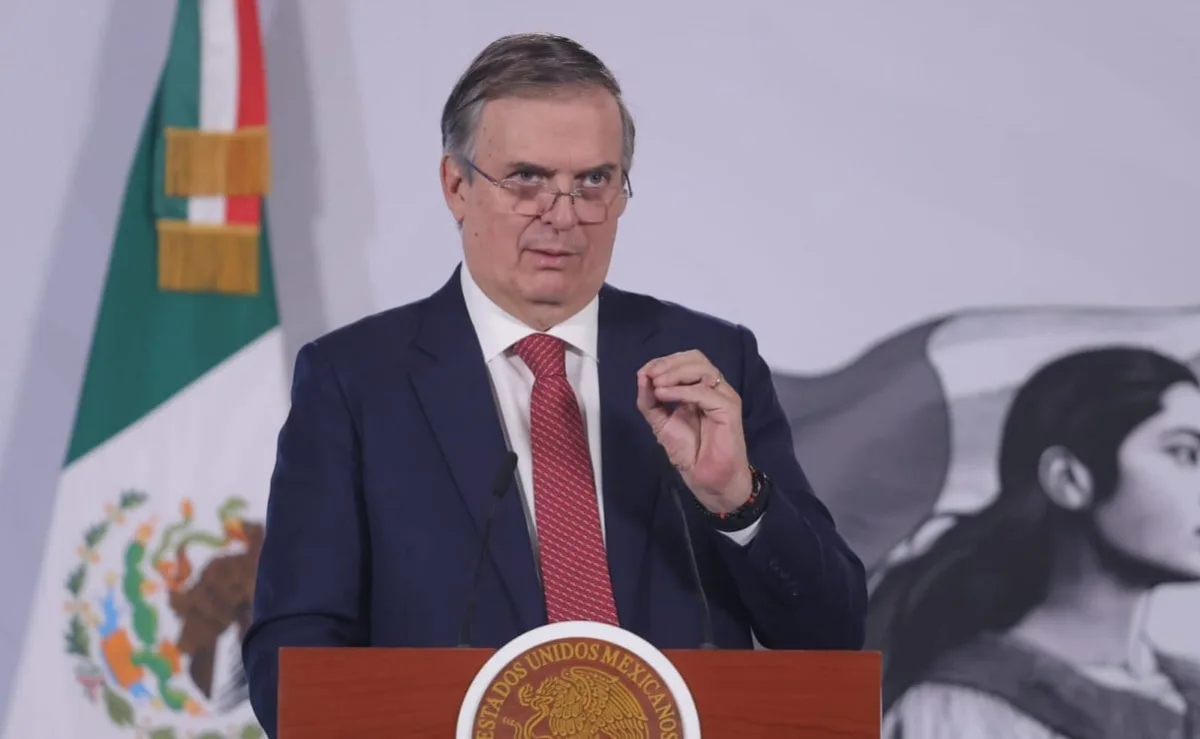
Automaker Kia will invest 649 million U.S. dollars at its Pesquería plant in Nuevo León to build, for the first time in Mexico, a fully electric vehicle — the EV3 model — the federal government announced on Wednesday during the morning press briefing.
Economy Secretary Marcelo Ebrard said the investment will be deployed between 2026 and 2028 and that the new production line will begin operations on August 4. He added that the project foresees 500 direct jobs in the first year and another 1,000 between 2027 and 2030, for a total of 1,500 new positions by the end of the decade.
According to the Ministry of Economy, the EV3 will start with roughly 27 percent domestic content and is part of the so-called Plan México, the federal government's industrial strategy to raise local added value in manufacturing. Until now, this model was assembled only in South Korea.
Ebrard added that Kia will pair the expansion with environmental infrastructure at the same Pesquería site, including a two-megawatt solar park that will grow to eight megawatts by 2030, and a second wastewater treatment plant to reuse around 1,050 cubic meters of water per day.
Why it matters for Cancún and Quintana Roo
Domestic production of the EV3 does not immediately change what is offered at Cancún dealerships, but it opens the door for the model to reach local showrooms with pricing and delivery times decoupled from shipping from Asia. Kia's Peninsula network keeps sales points in Cancún, Playa del Carmen and Mérida; the Pesquería launch is the first link in the chain for a Mexican-built EV to appear on southeast showroom floors.
For local drivers, the practical question is charging infrastructure. Quintana Roo currently has public and semi-public stations along corridors such as the Cancún–Tulum federal highway and at hotel-zone shopping centers. A larger fleet of domestically built EVs could push private operators to move faster on new fast-charging points in the state, an issue prospective buyers routinely raise before closing a deal.
What's next
The federal government said the Pesquería line begins on August 4. The Ministry of Economy will need to publish quarterly updates on both the investment and the domestic-content indicator that Plan México itself tracks. Sticker prices for the Nuevo León–built EV3 have not been disclosed, nor are there confirmed dates for its arrival at southeastern dealerships.
Related
The head of the Chamber of Deputies' Finance Committee says no new levies are planned; the package is formally presented in September.
The parametric policy covers sand and coral restoration after a cyclone; here's how it protects the natural heritage and tourism economy.
The Infonavit agreement fully subsidizes the release of already-paid loans, saving about 16,000 pesos per family in notary fees.
The State Congress launched the process to name the new members of the Citizen Participation Committee of the State Anti-Corruption System. Universities, research centers and civil society can nominate candidates.