
Proposal Would Earmark 15% of Mexico's Foreign-Tourist Tax to Fight Sargassum in Quintana Roo
Senator Mayuli Martínez filed a bill to set aside roughly 2 billion pesos a year from the Non-Resident Fee for tackling the seaweed.
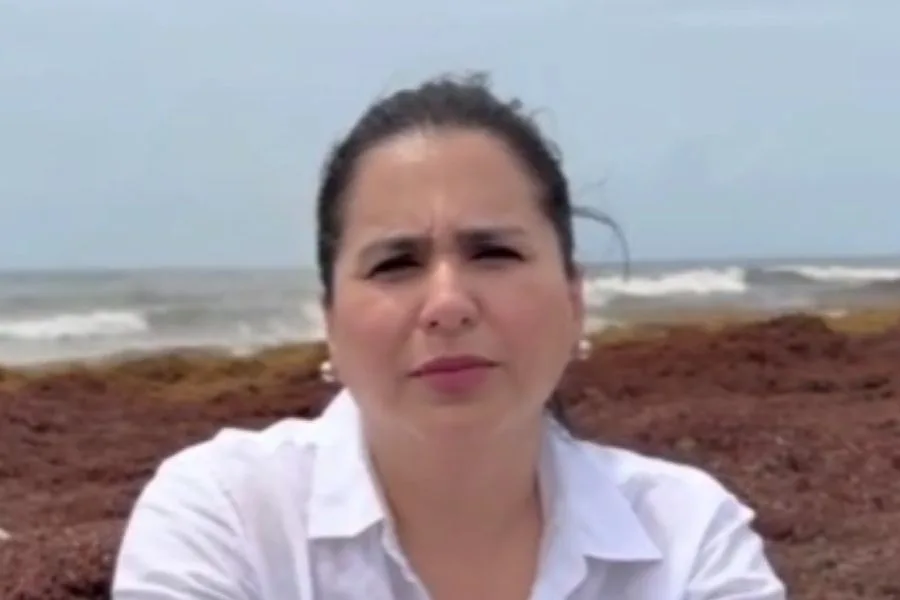
Quintana Roo senator Mayuli Martínez Simón filed a bill in Mexico's Senate to permanently earmark 15 percent of the revenue from the Non-Resident Fee (DNR) — the charge foreign visitors pay upon entering Mexico — for fighting sargassum in Quintana Roo.
According to the proposal, that share would amount to roughly 2 billion pesos a year, out of total collections of about 12.9 billion pesos. In 2025, each international tourist paid 860 pesos for this fee, and the state receives some 15 million international visitors per year.
"If Quintana Roo's tourism sustains a significant share of Mexico's revenue, Mexico must also answer to Quintana Roo," the lawmaker argued when presenting the bill.
A recurring demand every season
The proposal adds to a series of efforts by the senator along the same lines: this past June, from the Senate floor, she demanded that the federal government issue a natural disaster declaration over the growing arrival of sargassum on Mexican Caribbean shores, warning that the phenomenon hurts tourism, the economy, the environment and public health.
Today, sargassum response falls mainly on the Navy, state and municipal governments and hoteliers, without a specifically earmarked federal budget line — the situation the bill seeks to change.
What happens next and why it matters to you
The bill must be referred to committees for analysis and an eventual vote, a process that can take months; similar proposals filed in previous years have not advanced so far.
For anyone who makes a living from tourism in Cancún and the Riviera Maya, the issue is direct: heavy sargassum seasons drive up beach-cleaning costs, make the destination less attractive and hit the spending that thousands of local jobs depend on. A permanent federal fund would bring predictability to cleanup work and barrier installation, instead of relying on emergency funds each season.
Related
The head of the Chamber of Deputies' Finance Committee says no new levies are planned; the package is formally presented in September.
The parametric policy covers sand and coral restoration after a cyclone; here's how it protects the natural heritage and tourism economy.
The Infonavit agreement fully subsidizes the release of already-paid loans, saving about 16,000 pesos per family in notary fees.
The State Congress launched the process to name the new members of the Citizen Participation Committee of the State Anti-Corruption System. Universities, research centers and civil society can nominate candidates.