
UNCTAD Ranks Mexico 4th for US Manufacturing Investment
The World Investment Report 2026 places the country third among Chinese investment destinations and records its first entry into South Korea's top five; Quintana Roo, Yucatán and Campeche are absent from the hubs it identifies.
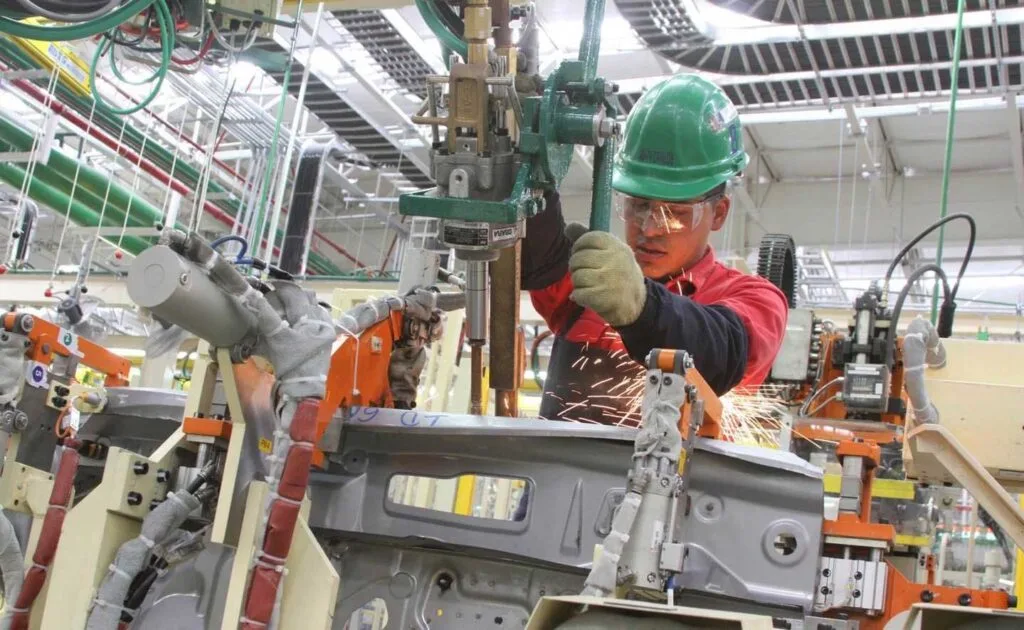
Mexico ranks fourth among the manufacturing investment destinations preferred by United States companies, according to the World Investment Report 2026, published by the United Nations Conference on Trade and Development (UNCTAD). The agency also places the country third among destinations for Chinese investment during 2021-2025 — a marked jump from 2015-2019, when Mexico did not even appear among the top five recipients — and records, for the first time, its entry into the group of five manufacturing destinations most relevant to South Korea.
For cumulative foreign direct investment between 2021 and 2025, UNCTAD reports flows of 79,429 million dollars from the United States into Mexico and 37,361 million dollars from the European Union. The agency attributes the country's appeal to three factors: preferential access to the North American market under the USMCA (T-MEC), regulatory stability, and production capacity already installed on Mexican soil.
The Yucatán Peninsula, off the manufacturing map
That momentum does not reach the region. UNCTAD's report does not list Quintana Roo, Yucatán or Campeche among the manufacturing hubs benefiting from this investment cycle; the nearshoring corridors the agency identifies are concentrated in the Bajío region and along the country's northern border, in states such as Nuevo León, Coahuila and Baja California.
For Cancún and southern Quintana Roo, the effect of this trend is indirect. The regional economy remains anchored in tourism, services and residential construction, activities unrelated to export manufacturing. Practical consequences that can be anticipated include greater demand for business air connectivity between the Peninsula and the country's industrial northern states, as well as possible upward pressure on the price of imported inputs that travel the same logistics routes supplying manufacturing plants.
What's next
Projects such as the Tren Maya, the Interoceanic Corridor of the Isthmus of Tehuantepec, and the Southeast's economic zones aim to capture part of this investment through differentiated tax schemes. The actual performance of those initiatives will be documented in later reports from Mexico's Secretariat of Economy and the National Institute of Statistics and Geography (INEGI), the agencies that keep the official record of foreign direct investment that actually materializes in the country.
The full report, with its country and sector breakdowns and methodology, can be consulted free of charge on UNCTAD's official website (unctad.org).
Related
Antonio de Jesús Riveroll Ribbón replaces Pablo Gutiérrez Fernández; unanimous votes cover beach access, caregivers and disability inclusion.
The 17.8% increase approved in committee is smaller than originally proposed; it still needs floor votes in the Chamber of Deputies and the Senate.
The city reports demolition at 100% and debris removal at 10% on the 6,637-square-meter lot.
The state anti-trafficking commission held its third session of the year; the government is also promoting the Red Card campaign in tourist areas. Warning signs and where to report.