
Cancún nears double the 2025 sargassum load; Delfines, Coral, Ballenas and Marlín hit hardest
Some 26,600 tons have been removed in Benito Juárez so far this year, nearly double the same period in 2025; landings concentrate in the hotel zone.
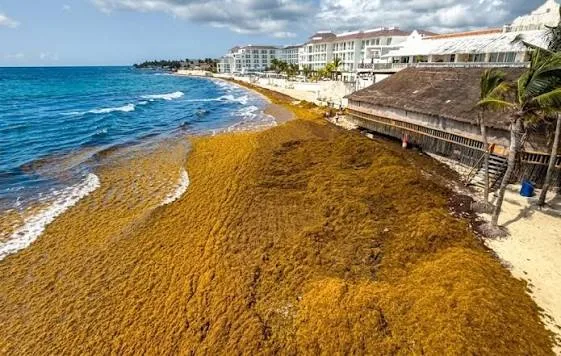
With August almost over, the beaches of the Benito Juárez municipality have accumulated roughly 26,600 tons of sargassum removed so far in 2026, nearly double the roughly 16,000 tons cleared over the same period in 2025, according to reports from the Federal Maritime Land Zone office (Zofemat) in charge of beach cleanup in Cancún.
August alone has seen about 4,400 tons collected, one of the highest monthly figures of the year, and authorities project reaching some 30,000 tons by month's end. Between 250 and 300 workers from Zofemat and support brigades take part daily, along with barriers and machinery at the heaviest landing points.
The mass arrivals concentrate on four hotel-zone beaches: Delfines, Coral, Ballenas and Marlín, which face the open Caribbean and take the brunt of sargassum pushed in by currents and winds. It is the most intense season Cancún has seen in recent years.
What it means for beachgoers. Fresh sargassum in the water is unpleasant but not toxic; the risk comes when it piles up and rots on the sand, releasing hydrogen sulfide —that rotten-egg smell— which can irritate the eyes and airways of sensitive people. Avoid prolonged contact with decomposing mounds and keep children from playing on them.
Practical guide. Before you go, check sargassum monitoring maps and the flag system for your chosen beach. Beaches to the north and in more sheltered waters —such as Playa Caracol, Langosta and Tortugas— tend to see less landing thanks to their orientation, a useful alternative on heavy-arrival days. If you spot untended piles on public paths or access points, you can report them to the Benito Juárez city government for removal.
Related
COEPROC coordinated the army, Conagua, CFE and firefighters over three days; storm drains are being cleared in Chetumal.
Benito Juárez city hall keeps crews on the streets and expects intermittent showers with lightning. Here is how to report flooding and stay safe.
Tropical Wave 42 and a cyclonic circulation keep the state under a forecast of storms with lightning, according to Mexico's National Weather Service.
After an average of 89 millimeters of rain, the city deployed 30 crews and closed several flooded intersections; residents are asked to use alternate routes and clear storm drains.