
Leishmaniasis testing and treatment are free in Quintana Roo, health officials say
Cancún hosted a national meeting with PAHO and WHO experts to strengthen care for the disease spread by the "chiclero fly."
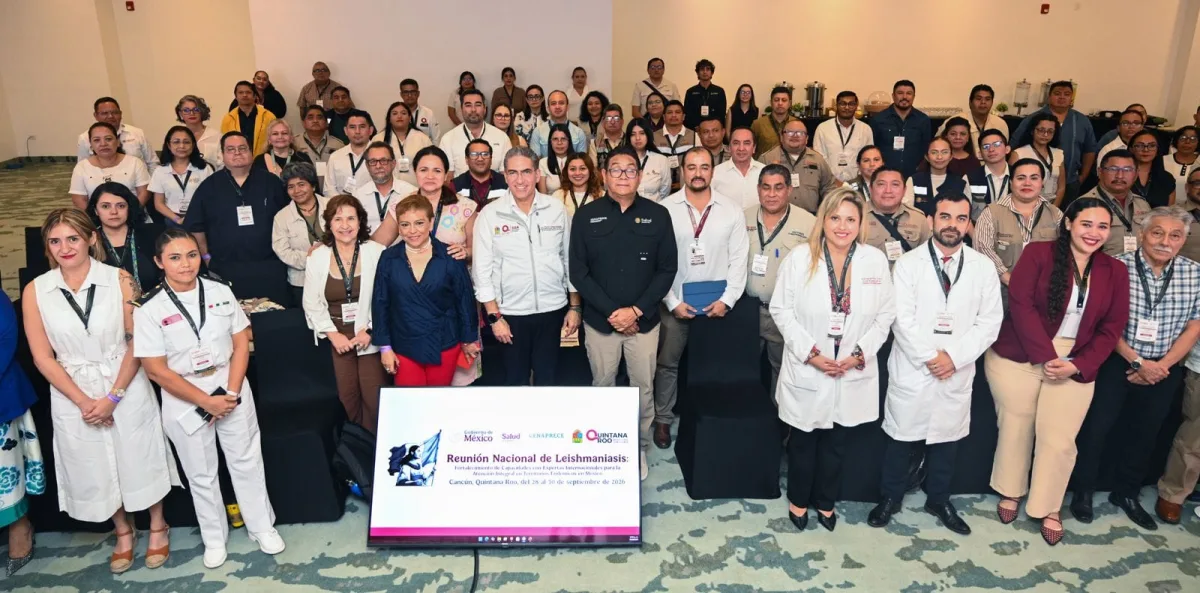
Cancún hosted the National Leishmaniasis Meeting on September 29, where federal, state and international health authorities agreed to strengthen diagnosis, treatment and surveillance of the disease in areas where it is endemic, the Quintana Roo government reported. State Health Services reminded residents that testing and treatment are free in the public health network.
The meeting, titled "Capacity Building with International Experts for Comprehensive Care in Endemic Territories in Mexico," was led by Health Secretary and State Health Services director Flavio Carlos Rosado, representing Governor Mara Lezama Espinosa. Specialists from CENAPRECE, InDRE, the Pan American Health Organization (PAHO) and the World Health Organization (WHO) took part, including PAHO's Mónica Guardo Martínez and WHO regional leishmaniasis advisor Ana Nilce Maia Elkhoury. Municipal Health director Héctor González Rodríguez and vector-control deputy director Eduardo Romero Contreras also attended.
What it is and how it spreads
Leishmaniasis is a parasitic disease transmitted by the bite of a small sand fly known locally as the "mosca chiclera" (chiclero fly). According to state health officials, controlling it depends on epidemiological surveillance, timely diagnosis, knowledge of the territory, monitoring of the insects that carry it, and clinical follow-up, especially in rural and jungle areas.
What the state has in place
According to the state government, Quintana Roo has:
- Free diagnosis and treatment through public health services.
- Four microscopy laboratories for vector analysis.
- The State Public Health Laboratory for quality control.
- The statewide network of health centers and hospitals.
What to do
Although the disease is mainly linked to rural and jungle areas, Cancún residents can be exposed when working, camping or hiking in the jungle. General precautions against biting insects:
- Use insect repellent and wear long sleeves and pants in jungle areas.
- If you notice a skin sore or lesion that won't heal after time in the jungle, go to your health center and mention where you were.
- Don't self-medicate: diagnosis and treatment in the public network are free.
Related
The Finance Ministry, the central bank and regulators concluded the system can absorb shocks, even though the peso lost more than 5% over the period reviewed.
The 24-item basket cost between 739.90 and 911.77 pesos in the September 14–18 survey; the consumer agency also reported diesel prices and the best remittance service.
INEGI confirmed GDP rose 1.4% quarter-on-quarter and 1.9% year-on-year from April to June, with services —the engine of Cancún's economy— up 1.4 percent.
The central bank keeps its benchmark rate unchanged and warns that services inflation is still pushing up prices; borrowing will stay expensive for a while.