
Quintana Roo installs 355 citizen committees to oversee public works statewide
The state's Public Works Secretariat formed groups of 3 to 5 residents, barring public officials and contractors, to monitor school domes, shelters, prisons and roads.
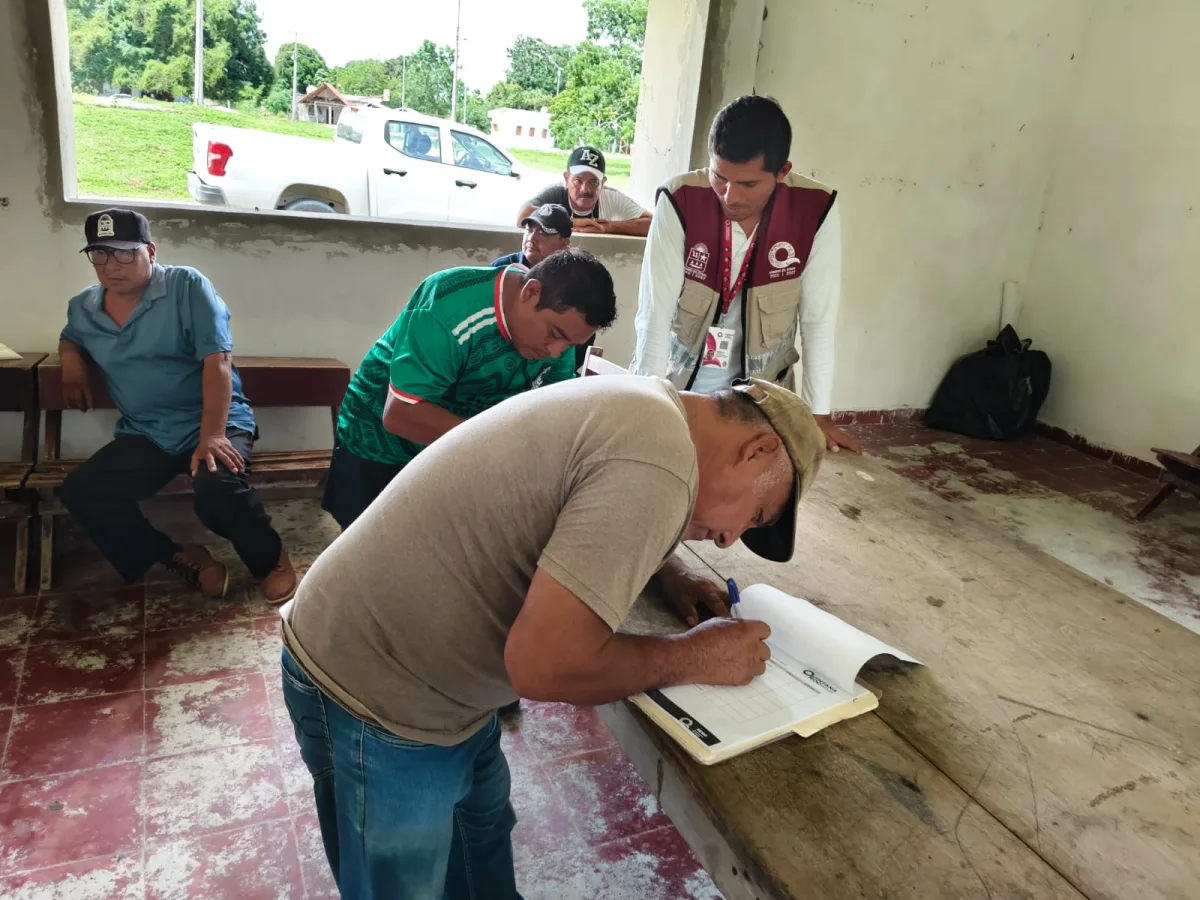
Quintana Roo's Secretariat of Public Works (SEOP) reports that 355 Social Oversight Committees are now active across the state's 11 municipalities, tasked with letting residents themselves monitor how publicly funded construction projects are carried out.
According to Secretary of Public Works José Rafael Lara Díaz, these committees "represent the main mechanism of citizen oversight" over ongoing projects, per the statement released by the state agency.
Each committee is made up of a minimum of three and a maximum of five members, plus alternates. SEOP specified that the groups cannot include public servants from the secretariat itself, nor contractors or suppliers tied to the project being monitored, a restriction meant to prevent conflicts of interest. The agency also said it promotes gender parity when forming the committees.
Per SEOP, the committees currently oversee projects such as:
- Construction of school domes
- Building of shelters
- Prison facilities
- Road rehabilitation and maintenance work
- Projects under the state's La Voz del Pueblo program
- Rehabilitation of the sewer system along the Ucum–La Unión highway
- Work on the Tulum–Punta Allen coastal road
What does this mean for residents of Cancún and the rest of Quintana Roo? Benito Juárez, the municipality that includes Cancún, is among the 11 municipalities where the program already operates, though SEOP's statement does not specify which projects within the city have an assigned committee. In practical terms, a social oversight committee is the formal channel, built into Mexico's public-works regulations, for a group of neighbors to track a project's progress, quality and use of funds in their own neighborhood, without requiring any technical construction background.
SEOP's statement does not detail the process for an interested resident to join a committee in their neighborhood, nor which office a resident should contact to report an irregularity on a project. Given that gap, anyone looking for information about a specific committee can approach SEOP's offices directly or their municipal government, both of which are responsible for carrying out local public works.
Related
Antonio de Jesús Riveroll Ribbón replaces Pablo Gutiérrez Fernández; unanimous votes cover beach access, caregivers and disability inclusion.
The 17.8% increase approved in committee is smaller than originally proposed; it still needs floor votes in the Chamber of Deputies and the Senate.
The city reports demolition at 100% and debris removal at 10% on the 6,637-square-meter lot.
The state anti-trafficking commission held its third session of the year; the government is also promoting the Red Card campaign in tourist areas. Warning signs and where to report.