
Cancún's Red Cross handles up to 46 emergencies a day, with traffic crashes at the top of the list
Most of the calls paramedics receive are crashes and pedestrian collisions. Here are the measures that cut the risk on the city's avenues.
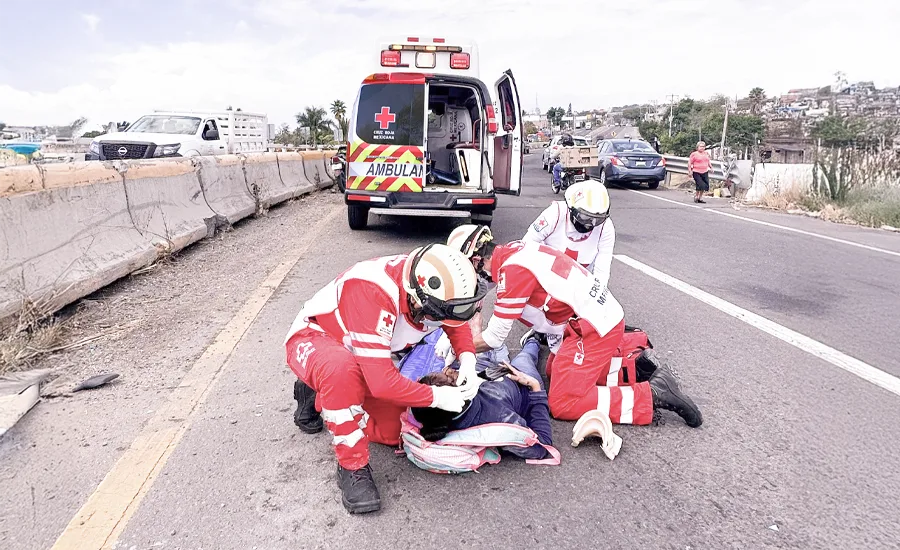
The Red Cross branch in Cancún handles between 45 and 46 emergency calls a day, and most involve traffic accidents, the relief organization reported. The figure, sustained day after day, illustrates the main everyday health risk for people moving around the city: crashes, rollovers and pedestrian collisions on high-traffic avenues.
Why it happens. Cancún combines wide, high-speed avenues —such as Bonampak, Kabah, Tulum and López Portillo— with busy intersections, a growing number of motorcycles and, this season, pavement made wet by afternoon rains. Each of those factors raises both the odds of a crash and the severity of injuries.
How to prevent it. The basic road-safety recommendations remain the most effective: obey speed limits and traffic lights, wear a seat belt in every seat, don't drive after drinking and keep your distance from the vehicle ahead, especially in the rain. For motorcyclists, a fastened helmet and visible clothing significantly reduce the risk of death. As a pedestrian, cross at corners and avoid distractions with your phone when stepping off the curb.
What to do in a crash. If you witness or are involved in an accident, your own safety comes first: turn on your hazard lights, move to a visible spot and don't move an injured person unless there is an immediate danger such as fire. Call 911 right away —it coordinates the emergency services— and give the exact location, the number of people affected and whether anyone is trapped or unconscious. Keeping the lane clear for ambulances to pass also saves lives: every minute counts in treating trauma.
Related
City hall delivered more than 12,000 square meters of asphalt, 5,000 of sidewalks and 17 stormwater wells.
The city is patching sections damaged by Aguakan's trenches and recommends detours via Calle Durango and Rinconada de las Chachalacas.
The IMOVEQROO pilot route serves 45 neighborhoods and the airport and will later join the MOBI system.
Repairs are free, Profeco says. Here are the models involved, how to check whether your vehicle is affected and whom to call.