
Cancún Neighbors Report Playground Locked in Region 93
The neighborhood's only playground has been padlocked since late June and opens just 3 to 8 p.m., a Caribe Peninsular report says; no public response from municipal authorities has been documented so far.
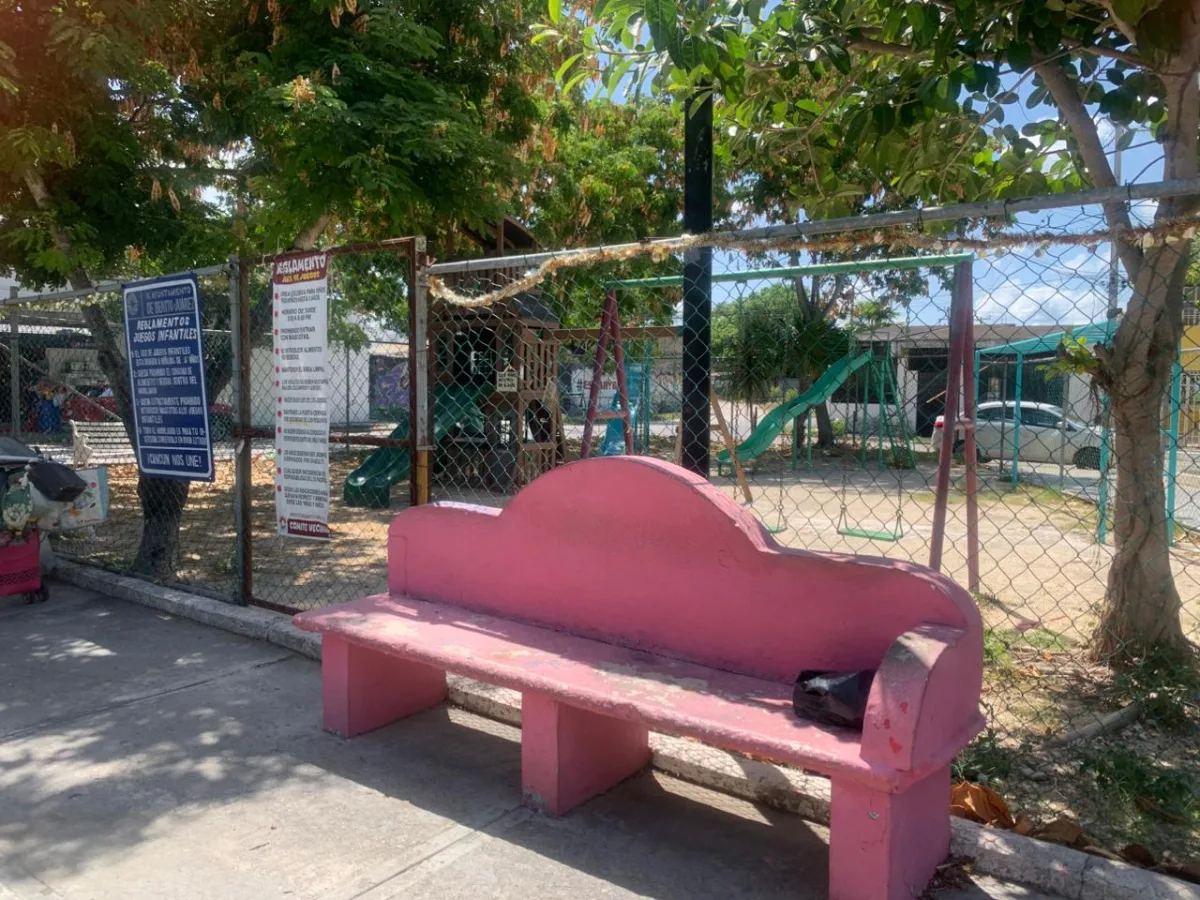
Residents of Region 93, a neighborhood in Cancún, say the area's only children's playground has been locked behind a fence and padlock since late June 2026. According to residents, the playground is accessible only from 3 to 8 p.m., leaving children without a place to play during the morning hours.
The neighborhood committee's chairwoman, identified as Rosy Novello, is the one who — together with a group of residents — installed the fencing, the padlock and the restricted-hours rule. According to the reported version of events, the stated goal was to prevent damage to the playground, which had previously remained open without restriction.
A separate group of neighbors disputes the decision. They argue the padlock limits children's right to recreation in what is a public space, and that the security concerns cited to justify the closure — by their account — have not gone away despite the reduced hours.
"The neighbors and the committee chairwoman closed off the children's play area, put up a fence and a padlock, and set a rule allowing it to open only from 3 to 8," one mother from the area said.
The morning closure coincided with the start of the summer school break, which increased the number of children left without access to the playground during the day. As of this report, no public response from the authorities of the municipality of Benito Juárez — which governs Cancún — had been documented on the matter.
In Mexico, parks and recreational areas within residential subdivisions are, as a general rule, public-use property under municipal jurisdiction, even though day-to-day upkeep is often left to neighborhood committees. That split responsibility — local committees handling daily matters, the municipality holding ultimate authority — is a recurring source of disputes like the one in Region 93, where a committee unilaterally restricted access to a space that, in principle, should remain available to the whole community.
In similar cases, Cancún residents can file a formal complaint with the Benito Juárez municipal government — through its Parks and Gardens department or its citizen participation office — or raise the issue directly at a city council (cabildo) session, the bodies with authority to resolve disputes over public-space access when a neighborhood committee acts without municipal backing.
Related
Antonio de Jesús Riveroll Ribbón replaces Pablo Gutiérrez Fernández; unanimous votes cover beach access, caregivers and disability inclusion.
The 17.8% increase approved in committee is smaller than originally proposed; it still needs floor votes in the Chamber of Deputies and the Senate.
The city reports demolition at 100% and debris removal at 10% on the 6,637-square-meter lot.
The state anti-trafficking commission held its third session of the year; the government is also promoting the Red Card campaign in tourist areas. Warning signs and where to report.