
Janal Pixán 2026 in Cancún: how to enter the altar and catrina contests with prizes up to 25,000 pesos
Registration is free and closes October 26 at 3 p.m.; the festival runs October 30 to November 2 in Puerto Juárez.
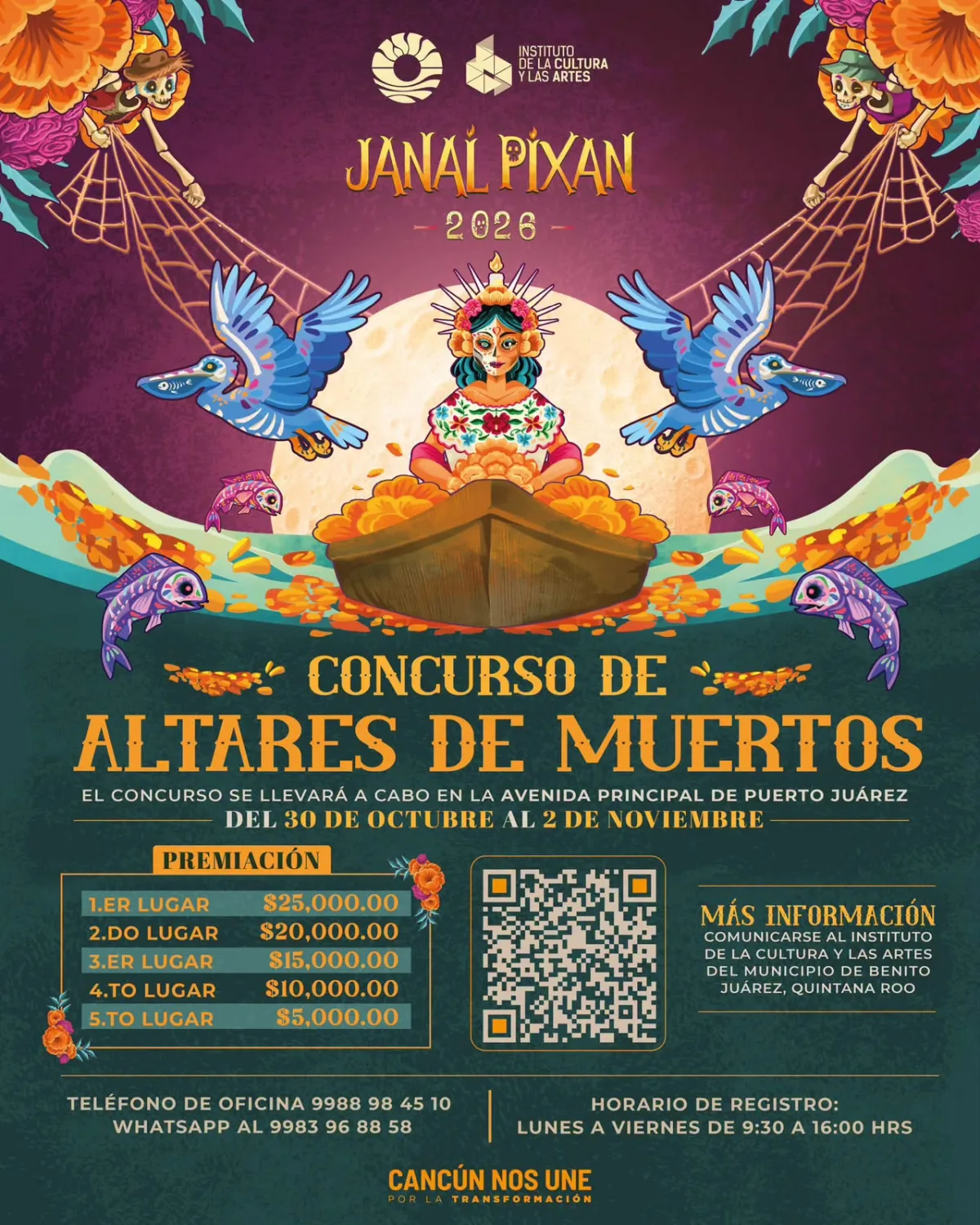
Benito Juárez City Hall has opened registration for the Day of the Dead Altars and Catrinas and Catrines contests of Janal Pixán 2026, with prizes of up to 25,000 pesos. Registration is free and open until Monday, October 26, at 3:00 p.m., the municipal government said.
Who can enter
According to the call, entries are open to elementary, middle and high school students; students from public and private universities; dance academies; civil and cultural associations; and the general public.
How to register
- Online: through the official form at https://forms.gle/yf2UtihDu1bxprzd7
- In person: at the Institute of Culture and the Arts (Instituto de la Cultura y las Artes), Supermanzana 23, block 55, lot 1, at Avenida Chichén Itzá and Avenida Tulum, near the central fire station. Monday to Friday, 9:30 a.m. to 4:00 p.m.
- Questions: call 998 898 4510 or WhatsApp +52 998 396 8858. Full rules are posted at cancun.gob.mx/convocatorias.
When and where
The contests are part of the festival to be held October 30 and 31 and November 1 and 2 along the main avenue of Puerto Juárez, according to City Hall.
Registration tips
- Read the full rules before filling out the form: they list categories, judging criteria and prize amounts by place.
- Don't wait until the last day: on Monday the 26th the in-person desk closes at 3:00 p.m., an hour earlier than usual.
- If you are entering as a school or group, choose a single contact person to receive notices from the organizers.
A living Maya tradition
Janal Pixán means "food of the souls" in Maya and is how the Yucatán Peninsula honors its dead, with altars, mucbipollo and visits to cemeteries. In Cancún, a city largely built by families who arrived from other states, the municipal festival is also a meeting point between Maya tradition and customs from elsewhere in Mexico.
Related
Quintana Roo's Health Department asks anyone, or any pet owner, whose animal touched the fox to call 998 888 6640 or visit a clinic.
The cost of the baskets that set Mexico's poverty line rose 4.4% year over year, outpacing headline inflation; restaurant food, onions and tomatoes drove the increase.
DIF Benito Juárez held a session with municipal psychologists at Universidad Humanitas; here are the lines to call if you or someone close needs support.
City and state officials joined the campaign at the CRIT Quintana Roo center and urged families, businesses and schools to take part.