
Municipal Crews Clean and Repave Four Cancún Supermanzanas
Benito Juárez's Public Services Department removed up to 90 tons of waste in Supermanzana 200 and repaved 480 square meters in Supermanzana 73 as part of a four-zone cleanup operation.
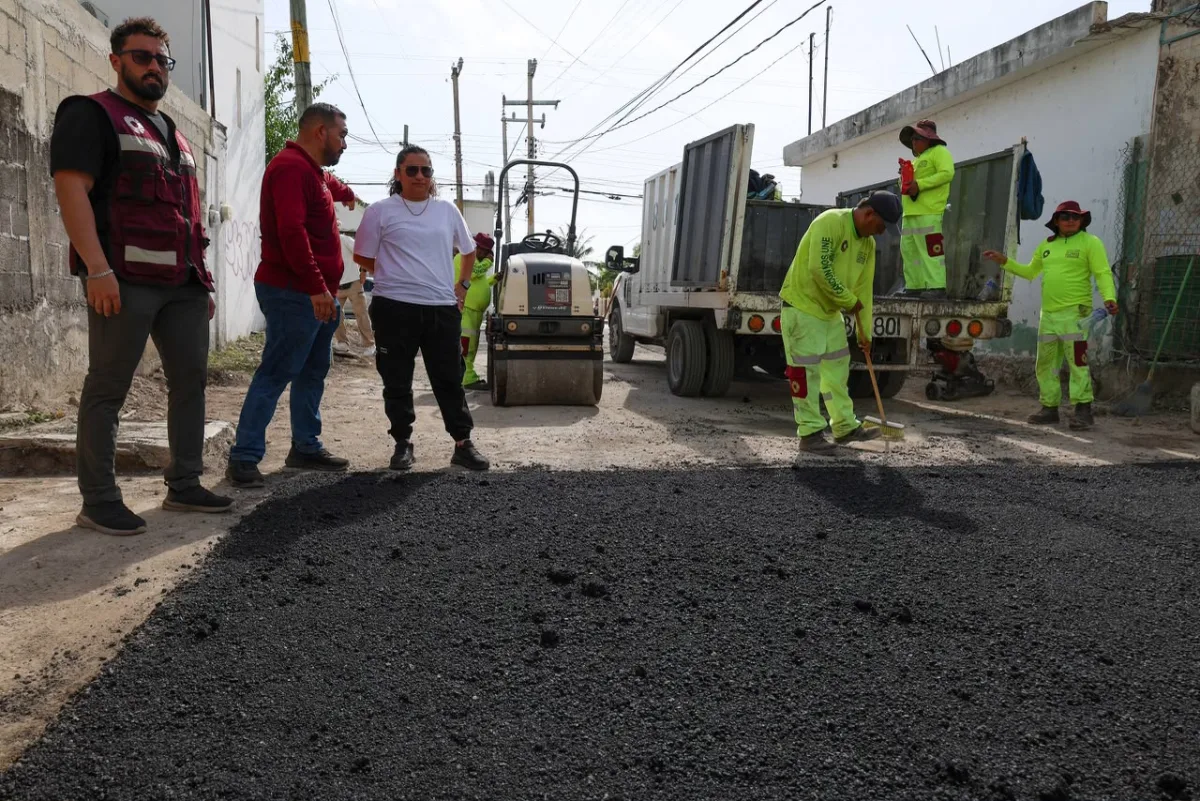
The Public Services Department of the Benito Juárez municipal government carried out integrated cleanup and maintenance brigades on July 10 in four zones of Cancún — supermanzanas 43, 73, 200 and 259 — with work that included desilting storm-water absorption wells, repaving streets and shutting down an illegal dump.
In Supermanzana 43, a crew of 27 workers cleared brush, swept streets, trimmed trees and cleaned around streetlights at Ciprés Park, Retorno Ciprés street and Parque Central, between Roble and Ciprés streets. Two 3.5-ton trucks and one collection truck supported the work.
The largest single action took place on Regina street, in Supermanzana 200, where the decentralized agency Solución Integral de Residuos Sólidos (SIRESOL) Cancún shut down an illegal dump and hauled away an estimated 60 to 90 tons of debris, scrap and plant waste, with the help of six workers, a backhoe, two dump trucks and a flatbed truck. Zone supervisor Roberto Jesús Quintal Guerrero said the site had posed a public-health and environmental risk due to open-air waste accumulation.
Touring the area, Landy Guadalupe Canché Pantoja, officer in charge of the Municipal Presidency's office, told residents that "when citizens and government work hand in hand, a cleaner, safer and more dignified municipality is built," after crews posted tarps warning against illegal dumping at the site.
In Supermanzana 259, crews desilted storm-water absorption wells on Palma del Vino street, between Palma Catechu and Palma Africana, using a drilling rig and a Vactor-type vacuum truck that removed plastic bags, dry leaves, PET bottles and accumulated soil. Left in place, that debris can clog drainage grates and cause flooding during the rainy season.
In Supermanzana 73, a 24-person crew finished repaving 480 square meters on 18 Poniente street, between CTM and Lombardo Toledano avenues, using 20 cubic meters of cold-mix asphalt and 12 cubic meters of cement binder, with the help of a Bobcat milling machine.
How to report an issue. Benito Juárez residents can report accumulated trash, illegal dumping or potholes through two municipal channels: the SIRESOL Green Units WhatsApp line, 998 353 2990, and the "ChatCun" line, 998 778 4500. The municipality did not say whether similar brigades are planned for other supermanzanas.
Related
City planning institute IMPLAN invites residents to ride on October 17 from City Hall for World Breast Cancer Day; health specialists will staff an information booth.
The bill now goes to the Senate, which has until Oct. 31. Taxpayers who use the program would have to pay their debt in a single payment before Jan. 1, 2028.
With this delivery, the land-regularization program has issued 2,102 deeds in Benito Juárez, according to the city.
The full Chamber upheld the non-resident fee set in committee, along with higher airspace, visa and railway charges. If you live in Mexico, you don't pay it.